
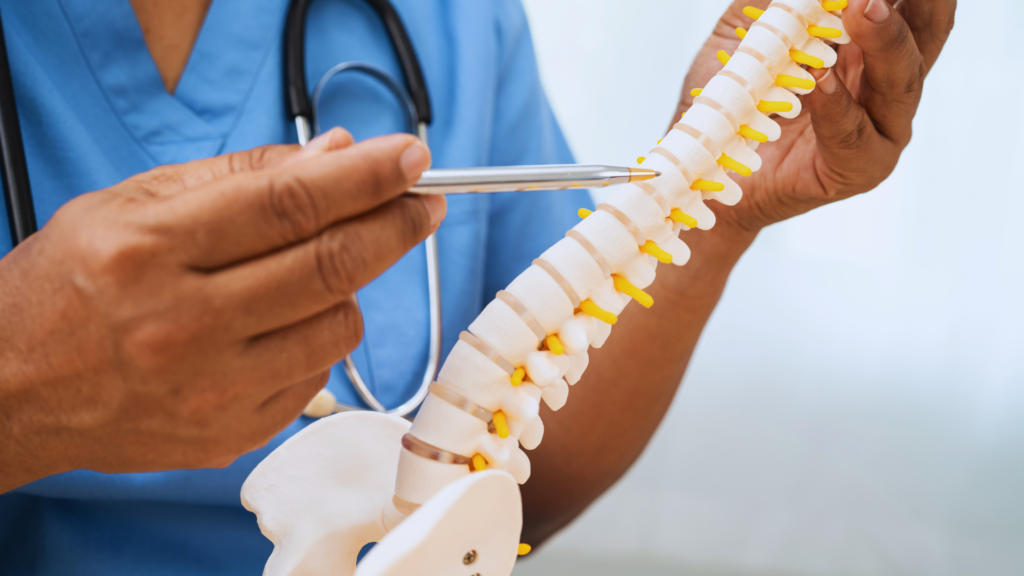
Spinal stenosis is a narrowing of spaces in your spine, and it compresses the spinal cord and nerve roots. This tightened space causes the spinal cord to become irritated, compressed, or pinched, leading to back pain and other symptoms. Here are some keys to understanding the signs and symptoms of spinal stenosis.
Most Common Cause of Spinal Stenosis
The most common cause of spinal stenosis is osteoarthritis, which gradually wears down the joints and tissues of the spine over time. As these age-related changes occur, bone spurs, thickened ligaments, and bulging discs can narrow the spinal canal and place pressure on nearby nerves.
Other possible causes include:
- Rheumatoid arthritis
- Previous spinal surgery
- Spinal injuries
- Bone disorders
- Spinal tumors (rare)
- Congenital (present at birth) narrowing of the spinal canal
Although spinal stenosis most often develops after age 50, younger people may develop it because of injury or inherited spinal anatomy.
Signs and Symptoms of Spinal Stenosis
Pain and Weakness in the Back and Legs
The medical term for this is neurogenic claudication. This occurs when the nerves in the lower back become compressed.
These symptoms can include constant pain and/or numbness in the legs while standing. This becomes worse when walking any distance or when bending the spine backward. One will have difficulty standing up straight and performing activities standing erect, but it is relieved by bending forward like leaning on a cane, a walker, or a shopping cart. Pain can improve with rest.
Problems with Gait
If the issue is in the lumbar area of the spine, it causes weakness in the thigh and leg muscles like the quadriceps and calves.
Cervical spinal stenosis can cause balance issues when walking. However, Cervical spinal stenosis may affect the spinal cord itself, leading to balance problems, an unsteady gait, or difficulty with coordination.
Foot Drop
Weakness in a foot causes the foot to drop down and drag. Falls are common.
Loss of Sensation in the Feet
Those with spinal stenosis may experience loss of feeling in the feet.
Sciatica
Sciatica is burning pain going into the buttocks and down the leg, depending on the nerve roots affected.
Radiating Arm Pain
Mild to moderate pain with cervical spinal stenosis is felt in the neck, shoulders, or arms with sensations of tingling and numbness in both hands.
Loss of Fine Motor Skills
Cervical spinal stenosis can cause trouble with fine motor skills like buttoning a shirt or even writing.
Frequently Asked Questions
What is the most common cause of spinal stenosis?
Osteoarthritis, the gradual wear and tear of the joints, is the most common cause. It typically develops after age 50, and symptoms often appear slowly rather than all at once.
Why does leaning forward relieve the pain?
Bending forward slightly opens the spinal canal and takes pressure off the compressed nerves. This is why many people find relief leaning on a shopping cart or walker, and why symptoms worsen when standing up straight or bending backward.
What is neurogenic claudication?
It is the medical term for the pain, numbness, or weakness in the legs that comes on with standing or walking and eases with rest or forward bending. It is one of the most recognizable signs of lumbar spinal stenosis.
Can spinal stenosis affect my hands?
Yes. When the narrowing occurs in the cervical spine, it can cause tingling or numbness in both hands and difficulty with fine motor tasks like buttoning a shirt or writing.
Does spinal stenosis always require surgery?
No. Many patients find meaningful relief through non-surgical, non-opioid treatments such as epidural steroid injections, nerve blocks, and radiofrequency nerve ablation.
When should I see a specialist?
Schedule an evaluation if leg or arm symptoms are limiting how far you can walk or what you can do. Seek care promptly for foot drop, worsening weakness, frequent falls, or any loss of bladder or bowel control.
Schedule an Appointment in Marlton, NJ
If pain, numbness, weakness, or difficulty walking is limiting your daily activities, Dr. Sonal Patel and the team at Ram Wellness Group can help determine whether spinal stenosis is the cause. We provide personalized treatment plans designed to relieve pain, improve mobility, and help you return to the activities you enjoy.
Call 856-387-7027 or request an appointment to schedule a visit at our office at 750 Rt 73 S, Marlton, NJ 08053.